The "Show and Tell" of Professional Growth
The simplest way to distinguish between effective and ineffective training is the "Show and Tell" analogy.
- Traditional Learning (Telling): A structured approach where knowledge is imparted through lectures and textbooks to build a theoretical foundation.
- Experiential Learning (Showing): A method that allows individuals to apply theoretical knowledge in authentic, real-world situations.
While experience is the basis of all learning, the efficiency of the process is defined by how the learner engages with that experience.
Strategic Comparison: Traditional vs. Experiential
Feature | Traditional Learning | Experiential Learning |
Primary Focus | Content & Product: Focuses on the "what" - memorization and acquiring facts. | Process & Application: Focuses on the "how"- critical thinking and problem-solving. |
Participant Role | Passive Recipient: Listening to lectures; often remaininguninvolved. | Active Participant: Personally involved, collaborating with peers, and taking initiative. |
Environment | Classroom-Centric: Learning via abstract symbols like text and images. | Immersive/Real-World: Direct experience through simulations (like VR), apprenticeships, or internships. |
Assessment | Standardized: Verifying information retention through benchmarks and exams. | Reflective: Self-evaluation and analyzing the process of success and failure. |
Why "The Cycle" Matters for ROI
Unlike the linear path of traditional instruction—lecture, study, test—experiential learning is a continuous cycle. To achieve deep learning, professionals must engage with Kolb’s Model:
- Experiencing: Engaging in a task through direct perception.
- Reflecting: Reviewing the experience and connecting feelings with ideas.
- Thinking: Forming theories or logical conclusions based on reflections.
- Acting: Testing these new theories in the next real-world experience.
This cycle respects workforce diversity by providing a framework that adapts to all nine distinct learning styles, whether an employee is Analytical (methodical), Deciding (goal-oriented), or Initiating(opportunity-seeking).
Bridging the Gap with Technology
The primary critique of traditional learning is the "disconnect" between theory and the actual application of material. While experiential learning is the clear solution for engagement, organizations often hesitate due to high resource requirements and complex external relationships.
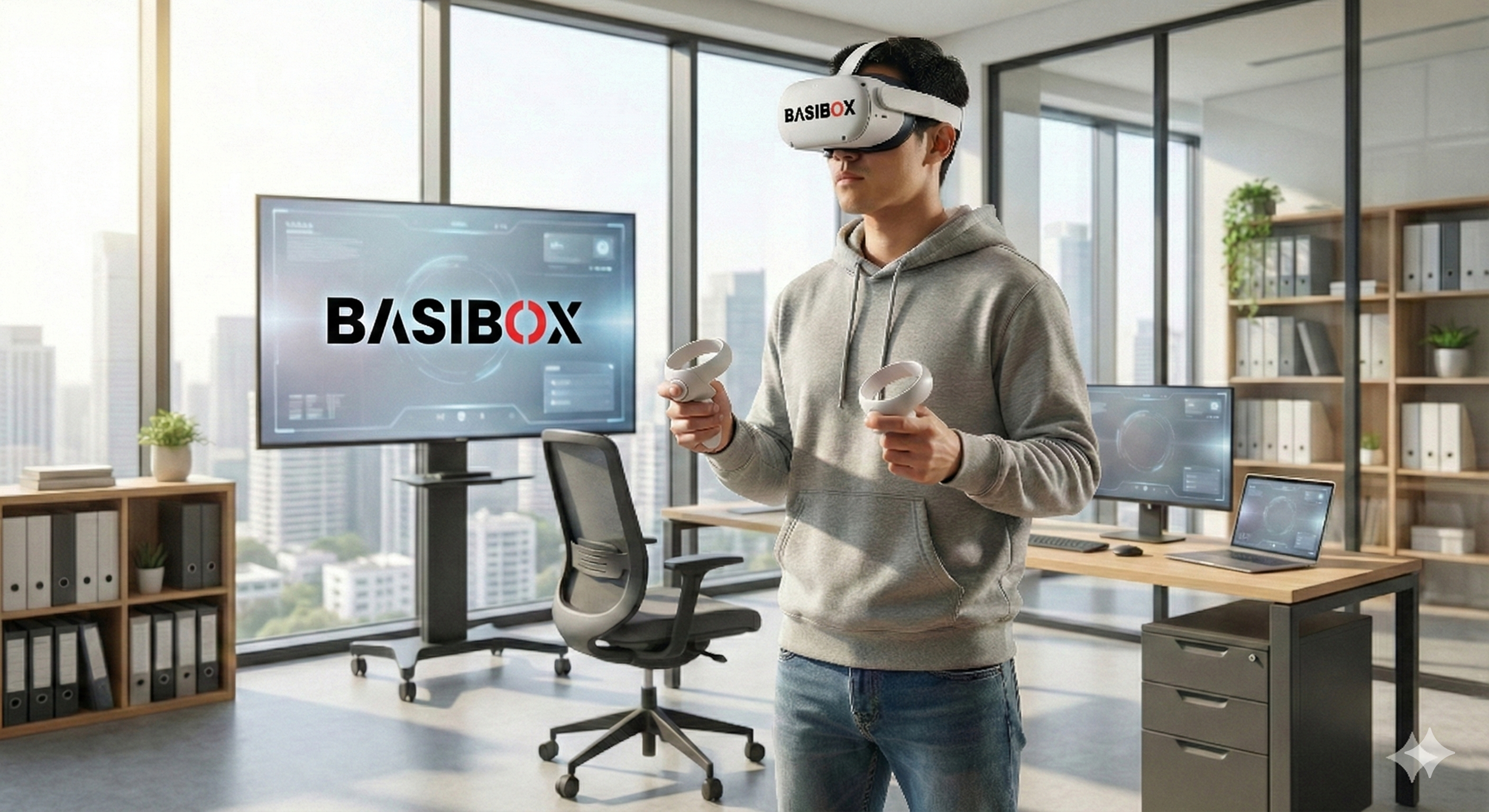
Digital transformation changes this equation. By utilizing immersive environments and VR simulations, companies can provide the "Concrete Experience" required by Kolb’s model without logistical overhead.
- Direct Exploration: Simulations allow learners to be thrown directly into an experience to explore essential skills.
- Learning by Doing: Curated experiences prioritize active participation over passive listening.
- Safety and Retention: VR simulations offer a secure environment to acquire skills for risky tasks, resulting in longer knowledge retention.
Finding the Right Partner to Apply Experiential Learning in the Corporate Life
Unlike a standard training process, preparing a VR simulation requires both extensive expertise and a robust technical infrastructure. Creating effective simulations necessitates transferring technical knowledge into a virtual reality environment while ensuring the simulation operates with a level of fluidity that does not disrupt the learning process. Therefore, establishing the right partnerships is vital for successfully implementing experiential learning within corporate life.
BASIBOX is designed to solve the dilemma of resource-heavy training. By bringing high-stakes, real-world scenarios into a controlled, scalable VR environment, we remove traditional barriers to experiential learning. We empower teams to "do" rather than just "know," ensuring a seamless and effective transition from training to the job.